
Why Isn’t Hypertension Diet Advice Working? 5 Crucial Points
Inside: Dietitians often hear that hypertension diet advice “didn’t work” – sometimes from people they’re counseling – and sometimes from healthcare providers. And while managing hypertension with diet alone may not be possible for many of these people, it’s worth considering a checklist of factors that could make a difference…even for resistant hypertension.
When someone says their efforts toward managing hypertension with diet don’t work, what’s your first thought?
 This common situation reminds me of one of the unexpected challenges of living in a house that’s 100+ years old.
When we moved in, virtually every room needed painting. And while that initially seemed like a pretty clear-cut task, it sure wasn’t. Every project brought complexities based on factors I didn’t know mattered.
You need a different paint for metal heat registers? You can’t just paint over an old water stain? And is it latex that can go over oil but not vice versa… or the other way around?
Experiences in projects like these remind me that success often comes from considering influence of factors that may easily be overlooked.
And the same can be true when deciding on the next step after someone’s attempt to lower blood pressure with diet is unsuccessful. Let’s build a checklist.
KEY TAKE-AWAY POINTS
♦ Managing hypertension with diet becomes easier with a dual strategy of increasing protective nutrients and phytocompounds plus limiting dietary sodium.
♦ Implementing diet advice is what drives results. That can require help making sense of conflicting media information, knowledge of relevant food composition, and aligning strategies with personal, family, and cultural preferences.
♦ Other lifestyle factors can enhance or reduce the effectiveness of managing hypertension with diet.
♦ Salt sensitivity varies among individuals and can be a consideration in managing hypertension.
♦ Treatment-resistant hypertension should not be mistaken for a reason that dietary strategies won’t work. Diet and lifestyle can help reduce even resistant hypertension.

Checklist Point 1:
Hypertension Diet Advice Needs Sodium and Other Key Strategies
Reducing sodium consumption is one of the strongest evidence-based strategies to lower blood pressure.
Reducing dietary sodium has a linear effect reducing blood pressure in randomized controlled trials (RCTs), including people with normal or elevated blood pressure, and across sexes, ethnicities, and age groups.
- If sodium intake exceeds 2300 mg/day, each reduction toward that level can be beneficial.
- Blood pressure reduction in response to lower sodium consumption is greatest in those who are older, those who are black, and those with elevated blood pressure.
- Reaching even lower than 2300 mg/day may benefit bring further blood pressure reductions, but it may be hard for many people to reach consistently, depending on lifestyle, cooking skills, and personal/family food preferences.
Dietary pattern can amplify whatever sodium reduction people are able to achieve. To reduce risk of, or manage, hypertension, skip the super-food hype and focus on the wide range of foods that can each play a part. For example, check how often typical eating habits include foods that provide a significant amount of: 
- Potassium: Higher potassium intake reduces systolic and diastolic blood pressure, with greatest blood pressure reduction in people with hypertension. Due to high heterogeneity among studies and absence of any clear dose-response relationship, no specific amount of potassium or sodium-to-potassium ratio has been included in Dietary Reference Intake recommendations specifically focused on disease reduction.
- Magnesium: If intake is low, increased intake may reduce elevated blood pressure. However, increasing intake beyond recommended levels does not further reduce blood pressure.
- Calcium: Higher intake is associated with modestly lower blood pressure even within a DASH diet.
- Nitrates: Moderate daily intake increases body production of nitric oxide (NO), a vasodilator, and is associated with lower blood pressure in prospective cohort observational studies and clinical trials.
- Flavonoids and other polyphenols: Increased flavan-3-ols & anthocyanidins modestly reduce blood pressure. A broad range of polyphenol compounds could work together affecting blood vessel walls. However, study results are inconsistent, so for now, the best advice is aiming for a broad variety of whole plant foods rather than zeroing in on sources of specific types.
- Dietary Fiber: Observational studies and RCTs show benefits for blood pressure with higher dietary fiber. Viscous types of fiber that reduce insulin levels and insulin resistance and fermentable types of fiber used by the gut microbiome may each promote healthy blood pressure through different mechanisms.
Each of these nutrients and compounds may promote a healthy blood pressure through effects on artery constriction and dilation, vascular elasticity, and antioxidant and anti-inflammatory defenses.
Practical Action Steps:
- Identify some examples of what foods help lower blood pressure as sources of these nutrients and compounds.
- Grab a more comprehensive list of foods to include in the free client-ready tip sheet,
Step by Step: Eating for a Healthy Blood Pressure. - Clarify questions and misconceptions about how recommendations come together in a DASH diet vs Mediterranean diet in this research review.
Checklist Point #2:
How to Better Support Implementing Hypertension Diet Advice
In today’s time-pressed world, well-intentioned health professionals may hope they’ve addressed the importance of diet for managing hypertension by saying “Cut down on salt” and having a handout or two ready to give patients whose blood pressure is climbing.
And patients may assume they can solve the problem by simply doing an online search or seeing what comes up on their social media feed.
Game changer: Meet with a dietitian – more than once
For people with hypertension or elevated blood pressure, compared with usual care or with no intervention, an analysis of 31 randomized controlled trials (RCTs) found that medical nutrition therapy (MNT) provided by a registered dietitian nutritionist (RD or RDN) showed significant improvements in both systolic and diastolic blood pressure.
The mean improvement in systolic blood pressure was 3.63 mm Hg and in diastolic blood pressure was 2.02 mm Hg. Although these reductions may seem small, they have clinically meaningful effects on heart disease and stroke. And several studies demonstrated a reduction in need for medications to control blood pressure.
- Interventions delivered by dietitians alone or within multidisciplinary groups were both effective, whether delivered in-person, remotely, or in a mix of the two, and whether in individual or group sessions (or a mix).
- What was important: Systolic blood pressure was reduced more effectively by interventions that included low-sodium diets, DASH diets, caloric restriction, and physical activity.
- Also important: whether MNT was provided by a dietitian working alone or as part of a multidisciplinary intervention, all the interventions in this analysis involved two or more MNT contacts with a dietitian as part of an intervention that lasted at least four weeks. (Another analysis of studies on multidisciplinary interventions for hypertension compared to usual care found that interventions of at least 6 months tended to be more effective, but only if dietitians were included on those multidisciplinary teams.)
Personalized troubleshooting: the dietitian’s specialty 

When it comes to actually putting dietary recommendations in practice, each individual has different questions and concerns, and faces different barriers to overcome. That’s where dietitians’ counseling and behavior change skills – and in-depth food and nutrition knowledge – come into play.
In the U.S., like many Western countries, more than 70% of dietary sodium reportedly is added outside the home, either eating outside the home or eating processed foods prepared outside the home. That’s why simply advising “Put away the salt shaker” produces limited success.
Here are some examples of situations where counseling with dietitians makes a difference:
- Processed and commercially prepared foods warrant a close look.
>> Many unprocessed or less processed foods can be prepared without a big chunk of cooking time, but people often need specific ideas and tips. And ideas suggested need to fit their personal and family food preferences and traditions.
>> All processed foods aren’t the same. Knowing what to look for on a food label can help people find the best available choice without agonizing over each selection.
• “Health halos” and uninformed social media “influencers” create misconceptions about food choices.
>> Specialized salts, like sea salt and pink Himalayan salt, are as high in sodium as everyday table salt. And the claims that they provide electrolytes like potassium and magnesium completely ignore the tiny quantities in these salts. The same volume of coarsely ground salt of any kind is lower in sodium than typical finely ground salt. But that’s because of the particle size, not the type of salt.
>> “Hydration enhancing” drinks, protein-boosters and veggie accompaniments can be beneficial in some circumstances for some people. But in general, hydration-focused drinks and drink mixes contain more sodium than potassium or other electrolytes, and they provide no benefit for someone whose physical activity involves a 30- or 60-minute walk. — Likewise, growing recognition that older adults and those aiming to increase lean body mass probably need more protein than baseline recommendations has led to perceptions that beef jerky, unlimited portions of cottage cheese, and protein bar snacks promote health goals without considering how they can elevate sodium consumption. — And while almost all of us would benefit from eating more vegetables, if the only way someone eats them is loaded with high-sodium commercial salad dressing or dip, big portions can work against blood pressure control.
>> Herbal teas containing licorice root or Panax ginseng (also known as Asian ginseng) may be assumed to be harmless because they’re “natural.” But consumed regularly, each of these can raise blood pressure and counteract effectiveness of antihypertensive medications. Checking supplements and herbal products people use can sometimes reveal surprising results.
- Culturally-based food traditions can also make blood pressure control more difficult, yet never get addressed by generalized advice. Presenting at a recent Cardiovascular Health and Well-Being dietetic practice group symposium, Sharon Smalling, MPH, RD, LD, shared examples of traditional sauces from various cuisines that provide 800 to over 1500 mg of sodium per serving, seasoning mixes with 200 to nearly 1000 mg per tablespoon, and snack foods with 200 to over 600 mg per serving. – Dietitians work to help people maintain their cultural traditions and still meet health goals.
Practical Action Step:
- Find a registered dietitian nutritionist (RD or RDN).
Click here for the Academy of Nutrition and Dietetics directory, which allows you to find dietitians who focus on health issues of greatest concern to you, as well as pick in-person (within a specified area) or virtual counseling.
Checklist Point #3 –
Lifestyle Choices Can Be Harnessed to Manage Blood Pressure
Even when someone is using recommended dietary strategies for lowering blood pressure, other lifestyle factors sometimes make blood pressure resistant to change. Without addressing those factors, expecting to manage hypertension by diet alone is like dragging a boulder up a hill. 
- Alcohol warrants a close look. Despite its heart-protective reputation, alcohol can promote inflammation and act through effects on artery walls, the nervous system, and hormones (like renin and cortisol, the “stress hormone”) to increase artery stiffness and constriction, thus raising blood pressure.
>> In people who drink more than 2 standard alcoholic drinks/day, substantially reducing intake can decrease systolic BP about 4 mm Hg in people with hypertension, and about 3 mm Hg in others. Blood pressure reduction is even greater in people who drink six or more drinks per day if they cut consumption in half.
>> Drinking anything over three times a week is associated with a greater risk of hypertension. But for people who don’t drink more than 2 standard alcoholic drinks/day, reducing alcohol is unlikely to significantly lower blood pressure, according to an analysis of 36 clinical trials.
>> Daily alcohol consumption isn’t the only consideration. Once a week (or more frequently) drinking 5 or more standard drinks entails greater risk of elevated blood pressure and hypertension. In the U.S., the NIH defines binge drinking as drinking that brings blood alcohol concentration levels to 0.08 g%. This is said to typically occur after 4 standard drinks for women and 5 drinks for men within about 2 hours. – The challenge of investigating whether this drinking pattern might be involved in blood pressure elevation is that people who engage in this pattern might not refer to their drinking as “binge drinking” or even “heavy drinking,” so we need to create a comfortable space to ask about drink numbers without labels.
- Physical activity can reduce blood pressure about as much reducing dietary sodium when it’s a regular part of lifestyle, and it’s strongly endorsed in major evidence-based recommendations. Light intensity physical activity may help sustain lower systolic blood pressure for nearly a day. This includes activities like slower walking and chores that don’t raise heart rate. All movement contributes to reducing blood pressure.
>> Moderate or vigorous aerobic physical activity should work toward a total of at least 150 minutes a week, ideally spread over 5-7 days.
>> Resistance exercise was at one time considered risky for people with hypertension because of blood pressure spikes with sudden, intense effort (especially if people don’t know to exhale on the exertion move). However, recent reports suggest that resistance exercise may benefit endothelial function and vasodilation, bringing equally strong blood pressure reduction as aerobic exercise when performed 2 to 3 days a week.
>> Plans for exercise should be reviewed with the individual healthcare providers of people with hypertension. Specific conditions requiring consideration and possible adaptions, especially for people with uncontrolled blood pressure above 180/110 mm Hg or several other health conditions, are identified in an American Heart Association scientific statement on resistance exercise training.
- Managing psychological health and maintaining healthy sleep patterns are now considered part of a heart-healthy lifestyle.
>> Previously, recommendations on lifestyle for blood pressure management found stress reduction practices like meditation, breathing routines, and yoga lacking evidence for long-term effects. But supportive evidence is growing.
>> Mindfulness interventions, such as gratitude-focused journaling and meditation training, reportedly may bring modest but clinically meaningful reductions in systolic blood pressure, though results may vary with the type of intervention and individual.
>> Short sleep duration (5 hours or less a night) and difficulty falling or staying asleep are linked with greater risk of hypertension in several observational prospective cohort studies. So far, evidence is still lacking regarding effectiveness of sleep interventions for reducing blood pressure, however.
Practical Action Steps:
- Check this research review if someone is tracking activity level based on steps and wondering if 10,000 steps is the best goal.
- Try this free step-counting tip sheet to help people who want to track steps feel less burdened and see more change.
Checklist Point #4 –
Resistant to Change in Sodium Consumption? It’s Possible
Studies are clear that overall, as sodium consumption increases, blood pressure and incidence of hypertension rise. And reducing sodium consumption lowers blood pressure. 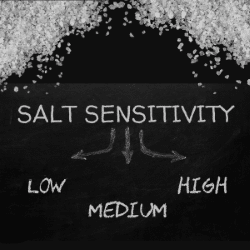
However, among participants within a study, individuals differ in their response to changes in sodium.
According to a scientific statement from the American Heart Association, individual response tends to be distributed in a bell-shaped curve. That means that the average drop in blood pressure from reducing dietary sodium that’s reported in a study is a pretty good representation of the effect in most people, but in some people blood pressure is reduced quite a bit more. And in some people, blood pressure drops much less… and possibly even increases.
People most likely to be salt-sensitive are those who are over age 45; black; or who have metabolic syndrome, insulin resistance, or chronic kidney disease.
Variation in salt sensitivity of blood pressure has been recognized for many years. But there is still not a single widely-recognized definition. And there’s no medical test for salt sensitivity that can be used in clinical practice.
Here’s what current research shows:
- Salt sensitivity of blood pressure seems to be partly an inherited trait, and relatively stable. But it can change over time. Especially as people age, their blood pressure tends to become more sensitive to sodium consumption.
- Diet quality can affect salt sensitivity. People with a low-potassium or low-quality diet tend to have blood pressure that’s more salt-sensitive.
What to say about sodium if someone’s blood pressure is not salt-sensitive?
Research in recent years shows reasons to limit sodium consumption even if it has little effect on blood pressure.
- Excess sodium accumulates in soft tissues like the brain, skin, and muscles. Extra dietary sodium is stored in soft tissues only temporarily when people are young. But with age or chronic disease, the body becomes less able to remove it. And scientists say this tissue accumulation may contribute to cardiovascular disease, muscle-wasting, diabetes, and other chronic conditions.
- Too much sodium may affect bone health and immune function. Excess sodium increases urinary calcium excretion, potentially increasing risk of osteoporosis. And emerging laboratory studies show concerning effects on immune cell function.
- If there aren’t contra-indications, limiting sodium may still be beneficial. Based on animal and human studies, high sodium consumption may lead to increased oxidative stress, produce changes in the gut microbiome likely to be unhealthy, and promote inflammation in blood vessel walls. — Individual needs must be considered, including potential for somewhat higher levels of sodium as optimal in some cases.
 Checklist Point #5 –
Treatment-Resistant Hypertension Doesn’t Equal Diet-Resistance
Nearly 1 in 6 people treated for hypertension has treatment-resistant hypertension. In clinical trials involving people at elevated risk of cardiovascular disease, the proportion is sometimes reported as even higher. 
Treatment-resistant hypertension is elevated blood pressure that’s above treatment goal despite the concurrent use of 3 different classes of antihypertensive medications, commonly including a long-acting calcium channel blocker, a blocker of the renin-angiotensin system (angiotensin-converting enzyme inhibitor or angiotensin receptor blocker), and a diuretic administered at maximum or maximally tolerated doses and at appropriate dosing frequency. [People who reach blood pressure targets on 4 or more antihypertensive medications are also included in this definition.]
People with resistant hypertension face even greater risk of heart attack, heart failure, stroke, and chronic kidney disease than others diagnosed with hypertension. Finding ways to reduce blood pressure can reduce the risk of these outcomes.
Diagnosis of resistant hypertension has to first rule out other reasons that blood pressure remains high.
>> Was blood pressure measured following the recommended standard procedure for patient preparation, cuff size, and technique?
>> Is this “white coat hypertension,” in which blood pressure readings are high in a healthcare provider’s office but meet the treatment goal measured outside the office?
>>Is the individual having difficulty following the full treatment plan?
Resistant hypertension does not mean that the influence of lifestyle has been ruled out, however. Among people with resistant hypertension, obesity, low physical activity and low physical fitness, and high sodium consumption are common.
Key Point: Resistance to treatment does not mean resistance to the effects of lifestyle.
Diet and exercise can lower blood pressure even in people with resistant hypertension.
Lifestyle Interventions in Treatment-Resistant Hypertension (TRIUMPH) is the first randomized controlled clinical trial to show that people with resistant hypertension can reduce blood pressure and improve important cardiovascular disease biomarkers in a structured and supervised program of lifestyle modification. Although small trials have shown improvement in resistant hypertension with individual strategies, especially physical activity, TRIUMPH is a new landmark in the field.
TRIUMPH tested a 4-month lifestyle modification program with dietary counseling, behavioral weight management, and exercise compared to a control group provided with a single counseling session of standardized education and physician advice. Among the 140 participants, 31% had diabetes and 21% had chronic kidney disease. Many had obesity, with an average BMI (body mass index) of 36.
The results:
- Systolic blood pressure: Participants in lifestyle program and control groups both reduced clinic-measured systolic blood pressure, which was the study’s primary outcome. However, those in the program reduced it more. And those in the lifestyle program also reduced 24-hour ambulatory blood pressure (systolic and diastolic), whereas it did not change in those who got the short-cut education session.
- Cardiovascular disease biomarkers improved in the lifestyle program participants. For example, this included beneficial changes in flow-mediated dilation, which assesses endothelial function, and resting baroreflex sensitivity not seen in the control group. Pulse wave velocity, a measure of arterial stiffness, showed no difference between the two groups, however.
- Aerobic fitness improvement, weight loss, and decrease in sodium consumption (based on urinary sodium as a marker) were all greater in the lifestyle program than in the control group.
Key Point: The difference wasn’t the information, it was the intervention.
Participants in the lifestyle program received:
>>Small group instruction with some brief individual counseling for four months. The program covered how to create eating habits aligned with the DASH diet, including a reduction in calorie consumption and sodium limited to no more than 2300 mg a day.
>> Weekly 45-minute group counseling sessions with a clinical psychologist focused on changes in eating behavior, individualized problem solving, and long-term maintenance of behavior change.
>> Supervised exercise at a cardiac rehab facility 3 times per week for 30 to 45 minutes.
People in the control group got the same information in a 1-hour educational session with a health educator and a workbook. They got an individualized DASH diet with calorie restriction and the same exercise prescription provided in the lifestyle program. The difference was that they had to tackle the implementation on their own.
Participants in the control group did achieve some lifestyle changes. They cut calories. And they lost some weight, though not as much as was typical in the lifestyle program. But indicators of sodium consumption don’t show as much change in the control group, nor an increase in daily steps or aerobic fitness, nor much difference in diet quality.
Overall, without the expert advice and motivational boost of the program, participants just didn’t create as much lifestyle change.
Lifestyle change in people with resistant hypertension can bring clinically significant changes in blood pressure.
TRIUMPH study authors emphasize that the blood pressure reductions achieved with lifestyle change — over 12 mm Hg reduction in clinic systolic blood pressure and nearly 7 mm Hg reduction in 24-hour ambulatory systolic pressure — are as large or larger than seen in previous trials of people on fewer medications, are big enough to improve cardiovascular outcomes (as seen in previous research)… and were achieved without the burden of increased medications and their accompanying increased cost, personal effort, and risk of medication interactions.
Participants in the lifestyle program varied in the amount of behavior change they made and in the blood pressure and other clinical outcomes they achieved.
While we await further studies to confirm these results and refine optimal program methods, it’s clear that identifying someone as having resistant hypertension does not mean that diet won’t work. It means that it takes more than a handout (or even a workbook) and a conversation.
Hypertension diet advice “isn’t working?” 

Just like all I’ve learned about troubleshooting by running through a mental checklist when painting projects don’t turn out as expected, when someone says that hypertension diet advice “didn’t work,” we can consider a range of factors that might be involved… and find a way forward.
Dietitians:
Get this dietitian cheat sheet, Nutrition & Lifestyle for Hypertension Prevention & Control
- Right at your fingertips: A summary of evidence-based strategies, a checklist of components of a diet to benefit blood pressure, and FAQs with soundbite answers to common client questions.
Click here to request this free resource.
Bottom Line on Troubleshooting When it Seems Hypertension Diet Advice "Doesn’t Work”
It’s not unusual for people – overwhelmed by nutrition information in the media and online and by zillions of food choices 24/7 – to believe that they’ve followed advice for managing hypertension with diet and feel frustrated with the results.
The 5-point checklist here can help to explore factors that might be involved. Start by checking whether there’s been too narrow a focus, missing out on the range of dietary strategies that can be effective. Yet even well-chosen strategies aren’t effective if someone is missing out on support needed to understand how to implement the strategies in ways that fit them. And as important as diet is for a healthy blood pressure, other elements of lifestyle can either amplify or fight the benefits.
We need to be clear about the power of diet and lifestyle for managing hypertension – and reducing risk of developing it. Even treatment-resistant hypertension can often be improved. And while medications may still be necessary, diet and lifestyle can enhance their effectiveness, reducing the burdens they can carry.
Want help saving time on keeping up with nutrition research and putting new studies in context? If you aren’t already receiving my research reviews by email, sign up so you won’t miss any of the other hot topics ahead!
Just Click Here.
Free Client-Ready Tip Sheets
- Step by Step: Eating for a Healthy Blood Pressure
- Boosting Magnesium: How to Fill a Gap with Simple Steps
Free Dietitian Cheat Sheets
- Hypertension: Strategies for Prevention & Control
- Quick-Start Packet: Boosting 3 Types of Fiber
(includes client-ready tip sheets and dietitian cheat sheets)
Online Resources
Alcohol
- What’s a Standard Drink?
- Drinking Levels Defined
– both from National Institute on Alcohol Abuse & Alcoholism (part of NIH)
Sleep
- A Good Night’s Sleep – National Institute on Aging (part of NIH)
Stress Management
- Mind and Body Approaches for Stress and Anxiety: What the Science Says (2024) – National Center for Complementary & Integrative Health (part of NIH)
- Emotional Wellness Toolkit – National Institutes of Health (NIH)
Related Karen Collins Nutrition Research Reviews
Balafa O, Kalaitzidis RG. Salt sensitivity and hypertension. J Hum Hypertens. 2021 Mar;35(3):184-192. doi: 10.1038/s41371-020-00407-1
Blumenthal JA, Hinderliter AL, Smith PJ, et al. Effects of Lifestyle Modification on Patients With Resistant Hypertension: Results of the TRIUMPH Randomized Clinical Trial. Circulation. 2021 Oct 12;144(15):1212-1226. doi: 10.1161/CIRCULATIONAHA.121.055329.
Bondonno CP, Dalgaard F, Blekkenhorst LC, et al. Vegetable nitrate intake, blood pressure and incident cardiovascular disease: Danish Diet, Cancer, and Health Study. Eur J Epidemiol. 2021 Aug;36(8):813-825.
Carey RM, Calhoun DA, Bakris GL, et al. Resistant hypertension: detection, evaluation, and management: a scientific statement from the American Heart Association. Hypertension. 2018; 72:e53–e90. doi: 10.1161/HYP.0000000000000084
Carey RM, Wright JT Jr, Taler SJ, Whelton PK. Guideline-Driven Management of Hypertension: An Evidence-Based Update. Circ Res. 2021;128(7):827-846.
Correia RR, Veras ASC, Tebar WR, et al. Strength training for arterial hypertension treatment: a systematic review and meta-analysis of randomized clinical trials. Sci Rep. 2023 Jan 5;13(1):201. doi: 10.1038/s41598-022-26583-3.
Crowe-White KM, Evans LW, Kuhnle GGC, et al. Flavan-3-ols and Cardiometabolic Health: a Guideline Recommendation by the Academy of Nutrition and Dietetics. Adv Nutr. 2022 Oct 3:nmac105. doi: 10.1093/advances/nmac105
Elijovich F, Weinberger MH, Anderson CA, et al. Salt Sensitivity of Blood Pressure: A Scientific Statement From the American Heart Association. Hypertension. 2016 Sep;68(3):e7-e46. doi: 10.1161/HYP.0000000000000047.
Fu L, Zhang G, Qian S, Zhang Q, Tan M. Associations between dietary fiber intake and cardiovascular risk factors: An umbrella review of meta-analyses of randomized controlled trials. Front Nutr. 2022 Sep 12;9:972399. doi: 10.3389/fnut.2022.972399.
Gibson R, Aljuraiban GS, Oude-Griep LM, et al. Relationship of calcium and magnesium intakes with the dietary approaches to stop hypertension score and blood pressure: the International Study of Macro/micronutrients and Blood Pressure. J Hypertens. 2023 Dec 21. doi: 10.1097/HJH.0000000000003648.
Grosso G, Godos J, Currenti W, et al. The Effect of Dietary Polyphenols on Vascular Health and Hypertension: Current Evidence and Mechanisms of Action. Nutrients. 2022 Jan 27;14(3):545. doi: 10.3390/nu14030545.
Haghayegh S, Strohmaier S, Hamaya R, et al. Sleeping Difficulties, Sleep Duration, and Risk of Hypertension in Women. Hypertension. 2023 Nov;80(11):2407-2414. doi: 10.1161/HYPERTENSIONAHA.123.21350.
Han, H., Fang, X., Wei, X. et al. Dose-response relationship between dietary magnesium intake, serum magnesium concentration and risk of hypertension: a systematic review and meta-analysis of prospective cohort studies. Nutr J 2017;16:26. https://doi.org/10.1186/s12937-017-0247-4
Levine GN, Cohen BE, Commodore-Mensah Y, et al. Psychological health, well-being, and the mind-heart-body connection: a scientific statement from the American Heart Association. Circulation. 2021; 143:e763–e783. doi: 10.1161/CIR.0000000000000947
Masum M, Mamani DA, Howard JT. Alcohol and Binge Drinking Frequency and Hypertension: a national cross-sectional study in the U.S. Am J Prev Med. 2024 May 16:S0749-3797(24)00165-X. doi: 10.1016/j.amepre.2024.05.008.
Miyauchi H, Geisberger S, Luft FC, et al. Sodium as an Important Regulator of Immunometabolism. Hypertension. 2024 Mar;81(3):426-435. doi: 10.1161/HYPERTENSIONAHA.123.19489.
Muralitharan RR, Jama HA, Xie L, et al. Microbial Peer Pressure: The Role of the Gut Microbiota in Hypertension and Its Complications. Hypertension. 2020 Dec;76(6):1674-1687. doi: 10.1161/HYPERTENSIONAHA.120.14473.
National Academies of Sciences, Engineering, and Medicine. 2019. Dietary Reference Intakes for Sodium and Potassium. Washington, DC: The National Academies Press.
Natural Medicines [database on the Internet]. Licorice [monograph] and Panax Ginseng [monograph], both current as of March 8, 2024. Accessed May 2024.
Ozemek C, Tiwari S, Sabbahi A, Carbone S, Lavie CJ. Impact of therapeutic lifestyle changes in resistant hypertension. Prog Cardiovasc Dis. 2020 Jan-Feb;63(1):4-9. doi: 10.1016/j.pcad.2019.11.012.
Paluch AE, Boyer WR, Franklin BA, et al. Resistance Exercise Training in Individuals With and Without Cardiovascular Disease: 2023 Update: A Scientific Statement From the American Heart Association. Circulation. 2024 Jan 16;149(3):e217-e231. doi: 10.1161/CIR.0000000000001189.
Reynolds AN, Akerman A, Kumar S, Diep Pham HT, Coffey S, Mann J. Dietary fibre in hypertension and cardiovascular disease management: systematic review and meta-analyses. BMC Med. 2022 Apr 22;20(1):139. doi: 10.1186/s12916-022-02328-x.
Robinson AT, Edwards DG, Farquhar WB. The Influence of Dietary Salt Beyond Blood Pressure. Curr Hypertens Rep. 2019 Apr 25;21(6):42. doi: 10.1007/s11906-019-0948-5/
Roerecke M, Kaczorowski J, Tobe SW, et al. The effect of a reduction in alcohol consumption on blood pressure: a systematic review and meta-analysis. Lancet Public Health. 2017 Feb;2(2):e108-e120. doi: 10.1016/S2468-2667(17)30003-8.
Scott-Sheldon LAJ, Gathright EC, Donahue ML, et al. Mindfulness-based interventions for adults with cardiovascular disease: a systematic review and meta-analysis. Ann Behav Med. 2020; 54:67–73. doi: 10.1093/abm/kaz020
Senkus KE, Dudzik JM, Lennon SL, et al. Medical nutrition therapy provided by a dietitian improves outcomes in adults with prehypertension or hypertension: a systematic review and meta-analysis. Am J Clin Nutr. 2024 Apr 18:S0002-9165(24)00403-9. doi: 10.1016/j.ajcnut.2024.04.012.
Whelton PK, Carey RM, Aronow WS, et al. ACC/AHA/et al. Guideline for the Prevention, Detection, Evaluation, and Management of High Blood Pressure in Adults. Hypertension. 2018;71:e13–e115.
Published : May 24, 2024
Tagged: DASH diet, exercise, healthy diet, healthy eating, healthy habits, healthy lifestyle, high blood pressure, hypertension, physical activity, phytochemicals, potassium, resistant hypertension, salt sensitivity, sodium
Meet the author/educator

Karen Collins
MS, RDN, CDN, FAND
I Take Nutrition Science From Daunting to Doable.™
As a registered dietitian nutritionist, one of the most frequent complaints I hear from people — including health professionals — is that they are overwhelmed by the volume of sometimes-conflicting nutrition information.
I believe that when you turn nutrition from daunting to doable, you can transform people's lives.
Accurately translating nutrition science takes training, time and practice. Dietitians have the essential training and knowledge, but there’s only so much time in a day. I delight in helping them conquer “nutrition overwhelm” so they can feel capable and confident as they help others thrive.
I'm a speaker, writer, and nutrition consultant ... and I welcome you to share or comment on posts as part of this community!