
Ways to Save Money on Groceries & Reduce Food Waste — Without Sacrificing Nutrition
Inside: Integrating ways to save money on groceries and reduce food waste into nutrition counseling, dietitians can add an often-overlooked strategy to help people bypass a major barrier they see to healthy eating.
One of dietitians’ greatest strengths is helping people recognize and work through the barriers they face to healthy eating. Right now, the cost of food is one of the most common—and pressing—concerns our clients bring to the table.
We know how to help people stretch their grocery dollars without sacrificing nutrition. But there’s another strategy that sometimes flies under the radar: reducing food waste. It’s practical, impactful, and one more way we can help people eat well on a budget.
This review provides a sound framework and practical counseling strategies to address this important need.
Key Take-Away Points
♦ Practical strategies to cut food waste can stretch grocery dollars without sacrificing good nutrition.
♦ Simple tricks for effective meal planning and intentional shopping routines make it easier to buy what you’ll use and waste less food, avoiding unnecessary spending.
♦ Conscious food storage and a correct understanding of food date labels can help waste less and save more.
♦ Choosing and using frozen foods wisely helps minimize waste, save money, and make nutritious choices convenient and accessible.
Why Reducing Food Waste Matters for Healthy Eating on a Budget
Food costs increasingly pose a barrier that people identify when discussing healthy eating. Whether managing cardiovascular disease, navigating cancer treatment, or striving for prevention of chronic diseases, it’s easy for people to feel caught between their nutrition goals and their grocery bills.
Registered dietitian nutritionists are in a key position to help patients and clients connect their health goals with practical, budget-friendly strategies.
- Spending less on food — through choosing less expensive options that are equally nutritious and using sales and coupons strategically — is a sound first step. And we’ve previously examined how people can do that effectively to save money on groceries and still eat healthfully.
- Reducing food waste is another solution — with impact that’s often overlooked — that supports both financial wellness and healthy eating patterns.
The average U.S. household reportedly spends from about $800 to $1300 per person each year on food that’s never eaten. Beyond the financial loss, most wasted food goes to landfills, where it is a major source of methane emissions contributing to climate change. Yes, amidst the growing attention to food waste in restaurants and cafeterias and on farms, consumer waste in the home accounts for the largest proportion of U.S. food waste.
What’s more, wasted food often means wasted opportunities to meet dietary goals, particularly for consuming more vegetables, fruits, and other nutrient-rich foods central to heart-healthy, cancer-protective diets.
The Hidden Costs of Food Waste: Health and Financial Impact

The average U.S. household wastes nearly 30% of food purchased, according to reports shared here.
Food waste doesn’t just affect the wallet — it undermines nutrition goals as well. What foods most likely end up as waste? According to the 2025 ReFED report on food waste:
- 44% is fresh fruits and vegetables
- 20% is prepared foods (includes foods like rotisserie chicken, sushi, and pasta salads from the grocery store deli department as well as food from restaurants and cafeterias)
- 13% is dairy and eggs
When fresh produce spoils or leftovers are discarded, this can disrupt people’s intentions to maintain a healthy eating that aligns with DASH, Mediterranean, or other plant-forward dietary patterns that are foundational to cardiovascular and overall health.
For patients dealing with fatigue — common during cancer treatment or heart failure — and for people who live alone, the stress of wasted food may also lead to more frequent reliance on takeout or packaged meals that are higher in sodium, saturated fat, and refined grains.
Addressing food waste becomes more than an environmental issue. It’s a nutrition counseling opportunity with tangible benefits for people’s health and household budgets.
How to Save Money on Groceries and Reduce Food Waste: Practical Tips
Helping people connect daily habits with reduced waste can have an immediate impact. Practical strategies fall into three key categories: planning, smart shopping and storage, and flexible food use — including leveraging potential help from frozen foods.
1. Plan to Cut Food Waste and Lower Grocery Costs 

- Shop with a plan, not just a list. Encourage people to think in terms of meals or menus rather than random ingredients. Reassure people who don’t want what feels like an overly rigid schedule that the meals planned can be switched around and adapted to fit changing needs and schedules. But having a rough plan helps ensure that there will be food on hand for the desired number of meals and that what’s purchased has an intended use.
- Check what’s on hand first. Start meal planning by looking at what’s already in the fridge, freezer, and pantry. This reduces duplicate purchases and helps use items before they spoil.
- Include a “use it up” meal weekly. Dishes like stir-fries, soups, salads, or frittatas are ideal for using up bits of vegetables; pulses (such as dried beans and lentils); cooked grains; and poultry, meat, or seafood.
- Be realistic. Help people match meal plans to their actual schedules. Overestimating how much home cooking will happen — or how much time will be available to cook — often leads to wasted fresh foods. In addition, showcase the power of a few “backup plan” meal ideas that they can make in very little time relying on foods always in the pantry and freezer, adding perishable items as available.
2. Buy Smart and Store Smart to Prevent Food Waste
 “If in doubt, throw it out.” That’s good advice to avoid foodborne illness.
But a little additional knowledge could go a long way to reduce how often that doubt comes into play.
Food safety is part of the education for a degree in dietetics. But for many people, boosting some key knowledge about safe food storage can eliminate a lot of the uncertainty that leads to throwing out food needlessly.
- Learn proper storage. Lots of people don’t realize that certain produce lasts longer when stored correctly. For example, separate ethylene-producing fruits (like apples) from sensitive items (like leafy greens), and freeze fresh berries if you won’t use them before they spoil.
- Portion poultry, fish, and meat before freezing. Breaking large packages into meal-size portions before freezing makes it easier to thaw only what’s needed — reducing waste and supporting meal flexibility.
- Label leftovers. A simple “freeze by” or “use by” date written on containers helps avoid forgotten items that eventually get discarded.
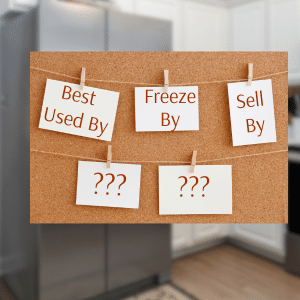
— What stops people from doing this? People aren’t sure about storage times. For most cooked foods, recommended safe time in the fridge is 3-4 days, then once in the freezer that extends to months. Encourage people to download the USDA FoodKeeper app from the website or smartphone app stores. This simple tool shows how long you can safely keep a wide range of foods in the refrigerator and freezer. → Note that the times for frozen food storage are for maintaining food quality; as long as freezer temperatures are properly maintained at 0°F (-18°C), it is safe to consume foods frozen much longer. - Understand food date labels. Most people are uncertain about how to interpret “sell by,” “best by,” and “use by” dates. Educating them that these are generally about quality — not safety — can prevent unnecessary discards.
Dating on food labels in the United States is not regulated by uniform descriptions.
Here are examples of commonly used phrases:
⇒ A “Best if Used By/Before” date indicates when a product will be of best flavor or quality. It is not a purchase or safety date.
⇒ A “Use-By” date is the last date recommended for the use of the product while at peak quality. Currently, it is not a safety date except when used on infant formula, where it ensures that the formula contains each nutrient in the quantity listed on the label. Do not use baby formula after its “Use-By” date. → See below, however, regarding a California law going into effect in 2026. If other states follow this precedent, “use by” dates may become used in reference to safety for other foods, too.
⇒ A “Freeze-By” date indicates when a product should be frozen to maintain peak quality. It is not a purchase or safety date.
⇒ A “Sell-By” date tells the store how long to display the product for sale for inventory management. It is not a safety-oriented date.
⇒ A “Pack date” on egg cartons with the USDA grade shield identifies the day eggs were washed, graded, and placed in the carton. (The three-digit code represents the day of the year, with 001 = January 1 and 365= December 31.) Eggs can be stored at home in the fridge 3 to 5 weeks from date of purchase, which may be up to 30 days from the pack date. — After purchasing eggs, it is recommended to refrigerate them in their original carton. Eggs should be placed in the coldest part of the refrigerator rather than on the door.
California has banned use of “Sell By” dates on consumer-facing labels beginning in July, 2026. At that point, food labels must clarify “Best By” for use or freezing to indicate when a product remains at its peak quality, and “Use By” for use or freezing to indicate when a food’s safety can no longer be guaranteed. – Some sources predict that this practice is likely to spread to other states, so stay tuned.
3. How to Use Frozen Foods to Reduce Waste and Save Money
 Frozen foods are a powerful tool for reducing food waste — and an underutilized resource for building healthy dietary patterns.
✅Clarify the Nutritional Quality of Frozen vs. Fresh Foods
- Research confirms that frozen vegetables and fruits are nutritionally comparable to — and sometimes higher in nutrients than — fresh, especially when fresh items spend extended time in distribution or home storage before use.
- Frozen foods are typically processed at peak ripeness, locking in vitamins, minerals, and phytonutrients.
✅ Demonstrate How Flexibility Supports Health Goals
- A bag of frozen squash, spinach, or blueberries waits in the freezer until needed — whether tomorrow or next month.
- With bags of frozen produce or individual portions of seafood, you can use only what you need, leaving the rest in the freezer for another time, reducing the risk of spoilage from having more than you need sitting in the fridge.
✅ Highlight How to Make the Smartest Choices for Frozen Foods:
- Look for vegetables labeled “no salt added” or without sauces.
- Choose frozen fruits without added sugars.
- Frozen whole grains (like brown rice, barley, and farro) can go from needing 45 minutes of cooking to a nutritious option ready to eat in 5 minutes.
→ Check the sodium content. In some cases it’s minimal, but some products (especially in blends with vegetables) may contain about 300 to 400 mg of sodium per cup cooked. This can still fit for most people, as long as they’re aware not to add high-sodium sauces or other foods. - Pulses, such as dry beans and lentils, aren’t available frozen in all stores. But if they are in your area, frozen can be an additional option besides buying canned versions for quick additions to soups, salads, and all kinds of mixed dishes. (See below about freezing home-cooked pulses, too.)
- Frozen seafood, like individually portioned salmon fillets, provides convenient access to heart-healthy omega-3s.
→ Frozen seafood does not need to be thawed before cooking. In most cases, fish can go from frozen to ready to eat in less than 15 minutes, although some thicker portions may take a bit over 20 minutes. Or if you prefer to thaw seafood first, following recommended instructions, it can be ready to cook in under 20 minutes. - Frozen entrées and meals warrant checking the Nutrition Facts panel for sodium, saturated fat, and added sugar content. Benchmarks for fit with a healthy dietary pattern can be individualized. Based on criteria from the American Heart Association and U.S. FDA for healthy choices:
→ For a meal, look for sodium no more than 600-690 mg, added sugars no more than 10 grams, and saturated fat no more than 4 grams (though the FDA suggests that saturated fat inherent in nuts, seeds, soy products, and seafood does not count in this limit).
→ For an entrée or mixture of vegetables, grains, and/or legumes, look for products with sodium no more than about 230 mg (10% of Daily Value) or perhaps 360 mg (depending on how big a proportion of the meal it will be), added sugars no more than 1 to 5 grams (2-10% of Daily Value), and saturated fat no more than 1 gram (5% of Daily Value) in each serving. – And make sure you check the listed serving size and adjust nutrient content listed to match your likely portion size.
Keeping sodium in a healthy range may be one of the most challenging targets to reach when using frozen entrées and meals.
- Some brands tend to target more heart-healthy levels than others. Don’t let a “health halo” name distract you, but if you look around, there is a wide range of choices.
- Save time by checking content online. Most grocery stores, as well as food companies, have nutritional content of each product easily accessible. So you can review options sitting comfortably at home and head to the store with a list ready.
- Consider the whole meal context. If the sodium content of a frozen entrée is a bit high, match it with other foods that are low in sodium for the rest of the meal. (And if a heart-healthy frozen meal is too low in calories to sustain you, the same principle of rounding out the meal healthfully applies.)
✅ Underline Freezing at Home as a Valuable Tool
- Freeze foods quickly. That’s the key to maintaining the quality of frozen foods. (That’s why today’s frozen fruits, individually quick frozen, are not like the frozen fruits of days gone by.)
→ Freeze casseroles and chicken, for example, in small portions rather than freezing the whole panful together. And putting food in the lower part of the freezer, where it’s coldest, will help freezing occur faster, too. - Extra whole grains need not go to waste.
→ Make it a habit to cook double the amount you need when you cook them yourself. Then pack up individual size portions to put in the freezer and pull out as needed. - Cooked pulses, like black beans and garbanzo beans, can be stored in the freezer for 6 months and maintain their quality. (Lentils reportedly may be best used within 3 months of freezing.)
→ After pulses have cooled completely, drain any excess liquid and store in single-serving portions in sealed, airtight containers or freezer bags. - Freeze sauces in a small muffin pan or individual custard cups, then pop out when frozen and keep them in a container that takes up little freezer space.
→ Extra tomato paste can be dropped by tablespoons onto a cookie sheet and frozen; when hard, add to a container or storage bag. That’s the perfect amount to pop into soups and sauces to add richness and nutritional value.
Challenging Pre-Conceived Notions on Frozen versus Fresh Options
A pilot study sponsored by the American Frozen Food Institute compared 5 of the most popular categories of frozen food dishes with their homemade counterparts.
The five dishes: Meat Lasagna, Pepperoni Pizza, Cheese Pizza, Macaroni & Cheese, and Broccoli & Cheese
The homemade comparison: Based on top-rated recipes on the Allrecipes.com website. Effort was made to choose recipes with seasonings and proportion of ingredients comparable to the frozen foods analyzed.
- Nutrition content comparison: In a side-by-side comparison using matching portion sizes, frozen and fresh versions were similar (within 5% of Daily Value of each other) for calories and 11 key nutrients. — Frozen versions were typically 5% lower in saturated fat and 2% lower in sodium than the home-prepared recipes, while calcium and protein were 2% and 5% higher, respectively, in the home-prepared dishes.
- Time comparison: Counting prep time (chopping, mixing, etc.) and cooking time, the frozen options averaged about 50 to 55 minutes less to get a meal on the table.
- Cost comparison: Average cost per serving for the frozen meals evaluated was $2.50 less per serving than their homemade counterparts. That would be a $10 savings per meal for a family of four.
** Key point on comparisons (as in studies of all kinds): Ask, “Compared to what?”
⇒ Compared to what someone typically prepares? A homemade (or “home assembled”) option may be a top-reviewed choice on popular recipe websites, but that doesn’t necessarily mean it aligns with recommended dietary patterns.
⇒ Or compared to how dietitians teach clients to adapt recipes? Dishes that originally call for lots of salt or salty seasonings, butter, fatty meats, refined grains, commercial sauces, and limited proportions of vegetables can be made more healthful.
Want to see more details about this pilot study? Check the American Frozen Food Institute (AFFI) website for the study’s methods and results.
Addressing Questions About Using Frozen Foods

My freezer is always stocked with foods I know I can count on for making healthy meals.
Some people may have limited exposure to using frozen foods and become more comfortable using them as a tool for healthy eating with some simple counseling points.
- Texture: Some people prefer the texture of frozen vegetables that are served alone when they’re roasted more than when they’re steamed. Other vegetables, like frozen spinach, are especially helpful when added directly into soups and stews where texture changes are unnoticed. Frozen fruit need not be thawed at all before blending into a smoothie or added into oatmeal before cooking.
- Refreezing: According to the USDA, frozen food (whether raw or cooked) that has been thawed in the refrigerator can be safely refrozen for later use. The texture may be compromised due to moisture loss that occurs during thawing, so just consider that in the way it is used. — However, frozen food that has been left out at room temperature for more than two hours should not be refrozen. This is when it’s a food safety issue.
How Savvy Use of Frozen Foods Supports Nutrition Goals for Cardiovascular Health, Oncology, and More
- Increased produce intake: Frozen vegetables and fruits make it easier to meet targets for DASH, Mediterranean, or plant-based patterns, which are foundational for both cardiovascular health and cancer prevention/survivorship.
- Reduced unintended sodium: Keeping a stock of frozen vegetables can make it easier to limit over-use of canned vegetables with added sodium. Experiment with how a squirt of lemon or flavored vinegar, a good sprinkle of herbs, a spice blend, or perhaps nutritional yeast (known as “nooch”) can make vegetables delicious without needing the higher-sodium, higher-priced vegetables frozen in sauce.
- Affordable access to seafood: Frozen fish options help patients enjoy meals that provide a good source of DHA and EPA omega-3s without the higher cost or perishability concerns of fresh fish.
- Supports fatigue management: For patients undergoing cancer treatment or managing heart failure, having healthy ingredients ready to go minimizes the barrier of “decision fatigue” and cooking exhaustion.
Incorporating Key Points in Counseling
A variety of tools are available to help people grow their knowledge and confidence in meal planning for strategic grocery shopping; in storing food safely for avoid unnecessary food waste; and in choosing food options that best fit their health needs, food preferences, storage and cooking space, time and skills, and available food budget.
See the Resources section below to access website information and downloadable tip sheets that provide more information you may want and help you share it.
◊ ◊ ◊ ◊ ◊ ◊ ◊
Want a free client-ready handout
to help people deal with grocery costs and reduce food waste without sacrificing good nutrition?
Save Money on Healthy Food — By Cutting Food Waste
⇒ Share 3 key steps that make a difference
⇒ Show detailed strategies and help people create an individualized plan
⇒ Get the guide… and get future nutrition research updates straight to your email inbox:
Click here.
◊ ◊ ◊ ◊ ◊ ◊ ◊
Bottom Line on Reducing Food Waste to Save Money on Groceries in a Healthy Diet
We know that helping people eat well means listening for what’s holding them back — and then offering realistic solutions. Today, food costs top the list of barriers our clients face. As dietitians, we’re skilled at finding budget-friendly ways to support healthy choices.
One strategy that deserves more attention? Reducing food waste. And it counts as a win-win when strategies for cutting waste can contribute to diet quality at the same time.
Small, practical changes in planning, shopping, and food storage can make a measurable difference to help people spend less and nourish themselves better.
Want help keeping up with which nutrition strategies make sense based on current research and putting new studies in context? If you aren’t already receiving my research reviews by email, sign up so you won’t miss any of the important topics ahead!
Just click here.
Conrad Z. Daily cost of consumer food wasted, inedible, and consumed in the United States, 2001–2016. Nutr J. 2020 Apr 20;19(1):35.
Food Safety and Inspection Service. U.S. Department of Agriculture (USDA). Food Product Dating. April 23, 2025.
Li L, Pegg RB, Eitenmiller RR, Chun J-Y, Kerrihard AL. Selected nutrient analyses of fresh, fresh-stored, and frozen fruits and vegetables. Journal of Food Composition and Analysis. 2017; 59:8-17. Free access via Sci Hub.
ReFED. From Surplus to Solutions: ReFED 2025 U.S. Food Waste Report. February 2025.
U.S. Environmental Protection Agency (EPA), Office of Research and Development. From Farm to Kitchen: The Environmental Impacts of U.S. Food Waste. EPA 600-R21 171. November 2021.
Handouts: Easy Steps to Prevent Food Waste: USDA
Guide to Food Date Labeling: USDA Tip Sheet
Food Storage Resources
FoodKeeper App provides safe food storage times for refrigerator and freezer on the FoodSafety.gov website and in a free downloadable app.
Storing Fresh Fruits and Vegetables for Best Flavor is a free handout from the Foundation for Fresh Produce that details how to store produce and how to separate ethylene-producing from ethylene-sensitive produce.
Frozen Food: Tips on Nutrition and Reducing Food Waste
American Frozen Food Institute (AFFI): Website with Additional Resources
Pilot Study on “Nutritional Parity” of Frozen versus Homemade Foods. American Frozen Food Institute summaries of the study’s methods and results.
Shelke K. Farm to Freezer: Exploring the Science and Benefits of Frozen Food. American Frozen Food Institute. (White paper)
Published : July 5, 2025 | Last Updated: July 7, 2025
Tagged: food costs, food waste, frozen foods, frozen vs fresh nutrition, grocery costs, healthy diet, healthy eating, save money on groceries, vegetables
Meet the author/educator

Karen Collins
MS, RDN, CDN, FAND
I Take Nutrition Science From Daunting to Doable.™
As a registered dietitian nutritionist, one of the most frequent complaints I hear from people — including health professionals — is that they are overwhelmed by the volume of sometimes-conflicting nutrition information.
I believe that when you turn nutrition from daunting to doable, you can transform people's lives.
Accurately translating nutrition science takes training, time and practice. Dietitians have the essential training and knowledge, but there’s only so much time in a day. I delight in helping them conquer “nutrition overwhelm” so they can feel capable and confident as they help others thrive.
I'm a speaker, writer, and nutrition consultant ... and I welcome you to share or comment on posts as part of this community!