

Olive Oil Polyphenols: Are They the Heart of Health Benefits?
Inside: Some research suggests that olive oil polyphenols are a key part of olive oil health benefits you see in the headlines. Other evidence points to the type of fat in olive oil, yet that doesn’t make olive oil the only good choice for heart health and lower cancer risk.
Choosing healthy oils can seem daunting in a world of information overload and a huge array of options. What’s the evidence on olive oil nutrition that garnered a qualified health claim? Is it the type of fat in olive oil, or are olive oil polyphenols the key? And what about research on other aspects of health?
Let’s explore what the big picture of current research may mean for you, and address some of the confusion about shopping for and cooking with olive oil.
Olive Oil Health Benefits: The Label Claim
In November 2018, the U.S. Food and Drug Administration (FDA) approved a qualified health claim for oils high in a fatty acid called oleic acid. Those oils include olive oil as well as high-oleic forms of canola, sunflower, safflower and algal oils.
The label claim’s message:
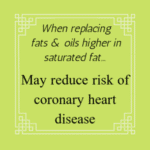
- Using about 1½ tablespoons a day of these oils to replace a fat or oil high in saturated fat may reduce risk of coronary heart disease, as long as it doesn’t increase total calorie consumption. This is based on evidence from studies of effects on LDL (“bad”) cholesterol levels.
- This is a Qualified Health Claim, because it’s backed by “supportive, but not conclusive scientific evidence”, according to the FDA. An earlier petition for an Authorized Health Claim, which requires a higher level of evidence termed “significant scientific agreement”, was denied.
◊ ◊ ◊ ◊ ◊ ◊ ◊
Are you choosing olive oil as part of a Mediterranean diet?
See which elements of a Mediterranean diet show most consistent heart- and cancer-protective potential.
For a free tip sheet with 5 doable steps, Click Here.
◊ ◊ ◊ ◊ ◊ ◊ ◊
Olive Oil for Heart Health
The traditional focus of heart-health research has been on how olive oil affects LDL and other blood lipids associated with cardiovascular risk. However, emerging research is exploring much more.
The Evidence on Blood Cholesterol 

It’s well-established that replacing saturated fatty acids (SFAs) with either MUFAs or PUFAs (polyunsaturated fatty acids), decreases LDL-cholesterol, a major risk factor for cardiovascular disease (CVD). Increasing PUFAs reduces LDL-cholesterol even more than increasing MUFAs in randomized controlled trials.
A meta-analysis of 54 randomized controlled trials lasting from 3 weeks to nearly 7 months compared effects of different fats and oils on blood lipids.
- LDL: Olive oil, safflower oil, sunflower oil, canola oil, soybean oil and all other vegetables oils tested reduced LDL compared to butter (which is primarily saturated fat). Sunflower oil produced a bigger drop in LDL than olive oil, but there was no other statistically significant difference in LDL reduction between olive oil and other oils.
- HDL: Olive oil raises HDL (“good”) cholesterol about the same or slightly more than other oils and fats. Although you may hear that coconut oil raises HDL in some studies, olive oil does so without raising LDL, which is a stronger marker of heart disease risk. When you hear claims about any of these oils and HDL levels, keep in mind that even when differences are “statistically significant”, they are small and may not be clinically significant.
The effects of particular oils on blood cholesterol can be predicted based on their fatty acid composition. But we need to pull together a broader range of studies to see how choices affect overall health.
Some people are interested in olive oil because they’ve heard that certain PUFAs called omega-6 (found in safflower, sunflower and soybean oils, for example) might promote inflammation. However, research shows that omega-6 fatty acids don’t only form substances that stimulate inflammation; they also form anti-inflammatory proteins called lipoxins. A review of the controversies and evidence about omega-6 PUFAs concluded that observational studies link higher omega-6 PUFAs with lower risk of heart disease and cardiovascular disease deaths; and although inconclusive for now, randomized controlled trials in humans suggest potential benefit.
Beyond Lipids: Extra Virgin Olive Oil Benefits

Olive oil health benefits may go beyond the effects of its monounsaturated fat on blood lipids. Virgin and extra virgin olive oil polyphenols (hydroxytyrosol, as well as oleuropein and tyrosol) and other natural compounds including squalene, tocopherols (related to vitamin E), terpenoids, and sterols (like B-sitosterol) may also play a role.
- Anti-oxidant support: These compounds may help support the body’s own antioxidant defense system, since some controlled human trials show reduction in markers of oxidative stress and reduced LDL oxidation (which makes LDL less atherogenic).
- Inflammation: In some controlled trials, people given capsules of virgin or extra virgin olive oil show modest reduction in certain markers of inflammation compared to people given other fats. Yet other studies show no meaningful difference. For now, studies like these show potential for less-refined olive oil to contribute to an anti-inflammatory diet, but it’s not clear what accounts for the widely varying results.
- Blood vessel function: Olive oil with these phytochemicals may improve the ability of blood vessels to dilate appropriately, according to some studies. Reduced “flow mediated dilation” (FMD) is a measure of blood vessel health that is considered an early marker of future heart disease. Ability to dilate is an important trait for maintaining a healthy blood pressure. And a few intervention studies in people with hypertension have found that extra virgin olive oil reduced blood pressure compared with oils rich in MUFA but low in phenolic compounds.
The Evidence on Heart Attacks & Strokes

Comparisons of high versus low MUFA, or high versus low ratio of MUFA to Saturated Fat: A meta-analysis of 32 cohort studies shows a trend for fewer cardiovascular disease deaths and fewer cardiovascular events (deaths + heart attacks, strokes, etc.) with diets higher in MUFA. But neither trend was statistically significant, meaning the association could have occurred by chance.
- But… MUFA is not always a marker of olive oil consumption. In countries such as Greece, Spain and Italy, more than half the dietary MUFA comes from olive oil and other plant foods. But in a “Western diet” typical of other European countries and the US, MUFA is mainly supplied by meat and other foods of animal origin. The influence of other nutrients and compounds in these foods, and of other foods in Mediterranean versus Western eating patterns, could easily cloud over any effect of olive oil.
- In the same meta-analysis noted above, people in the top 1/3 of olive oil consumption had 23% fewer deaths from cardiovascular disease than those with the lowest 1/3 of olive oil consumption. This association was statistically significant, and top olive oil consumers showed a trend for fewer cardiovascular events, too. Even so, associations in studies like these can’t prove cause-and-effect.
Mediterranean diet studies: Mediterranean diets have been associated with lower risk of heart disease, heart attack, ischemic stroke and total cardiovascular disease in analyses of multiple studies. Most of these were observational studies that followed people for many years, and compared people whose eating habits were more consistently meeting characteristics of a Mediterranean-style diet to people whose diets less closely met those characteristics.
- But… There is no single Mediterranean diet. Mediterranean-style diets represent a pattern that differs in several ways from typical American eating habits. Olive oil as the primary source of fat is only one of those characteristics. Still, in a study involving the EPIC-Spain cohort population, even after controlling for other components of a Mediterranean diet, people with highest olive oil consumption (as a proportion of calories) had 22% less incidence of coronary heart disease and 44% fewer heart disease deaths compared to people who consumed the least or did not use olive oil.
Olive oil in the U.S.: The Nurses’ Health Study and Health Professionals Follow-up Study provide a unique opportunity in a large population to examine the relationship of olive oil and CVD outside the Mediterranean. Compared to people who did not use olive oil, those who consumed the most olive oil (averaging just under one tablespoon/day) had 14% lower risk of CVD, especially coronary heart disease, during 24 years of follow-up. You might wonder if olive oil use simply signaled an overall healthier diet in an observational study like this. But this risk reduction was calculated after periodic updates of current eating habits and adjustments for multiple components of a healthy diet and relevant risk factors.
- It doesn’t take a lot. Studies in Mediterranean populations tend to reflect use of 2 to 3 tablespoons of olive oil per day. So it’s important to know that in this U.S.-based population, even consistent replacement of small amounts (5 grams/day) of a saturated fat like butter with olive oil was linked with less heart disease.
- It’s not all-or-nothing. Similar to the results of studies on LDL-reduction, there was no significant difference in CVD risk between olive oil consumption and a composite of other plant oils (canola, corn, safflower and soybean). However, this study looked only at olive oil as a whole. It’s possible that risk might be even lower if researchers had been able to zero in on use of extra virgin olive oil specifically, but that would be challenging to do in an observational study like this.
Cancer-Protective Eating
Could olive oil also contribute to eating habits that reduce cancer risk? Perhaps, at least in the oil’s less refined forms. Virgin and extra virgin olive oils contain compounds with potential antioxidant and anti-inflammatory effects. In animal and cell studies, these polyphenol compounds can reduce damage to DNA from exposure to free radicals. In addition, they affect cell signaling and gene expression in ways that slow growth and reproduction of abnormal cells and stimulate their self-destruction.
Research on Olive Oil and Cancer

Total MUFA consumption does not appear associated with cancer risk in an analysis of 19 population studies from Mediterranean and non-Mediterranean countries. However, people who consumed the most olive oil were 34% less likely to develop cancer than people who consumed the least. This association was particularly seen for post-menopausal breast cancer, and colorectal and other digestive tract cancers.
- But… The studies in this analysis were case-control studies. That’s a type of study that counts on people’s accuracy in recalling diet before a cancer diagnosis, whereas prospective cohort studies are considered stronger. Moreover, these associations don’t prove cause-and-effect, and could reflect a whole range of food choices that go along with more use of olive oil. For example, perhaps there are other differences in the food choices of people who use more olive oil.
What about a Mediterranean Diet and Cancer Risk?

When looking only at prospective cohort studies in an analysis of multiple studies, people whose diets scored highest on characteristics of a Mediterranean diet had 14% fewer deaths from cancer than people with lowest Mediterranean diet scores. They also had 6% lower risk of breast cancer and 14% lower risk of colorectal cancer. However, the 2018 landmark report from the American Institute for Cancer Research (AICR) that reviewed available research on many aspects of diet and cancer risk concluded that for most cancers, evidence is too limited to allow any conclusions about a Mediterranean diet.
- What about the olive oil? Researchers grouped together all the women involved in the PREDIMED trial to consider this question within the context of a Spanish Mediterranean diet. Compared to those who got less than 5% of their calories from extra virgin olive oil, the women who got more than 15% of their calories from extra virgin olive oil had less than a third of the breast cancer risk. On the other hand, in the analysis above (which includes these PREDIMED results), olive oil was not identified as a component of the Mediterranean diet likely to account for the association with lower cancer risk.
Tips: How Olive Oil Fits in a Healthy Diet

Olive oil combines well with many foods that are part of a healthy plant-based diet:
- Make a super-easy homemade salad dressing in minutes. You’ll get a healthy oil and much lower sodium than bottled dressing. This can be as simple as just 3 or 4 parts olive oil (ideally extra virgin) to 1 part of some acidic ingredient. I often use balsamic or red wine vinegar (or any kind other than distilled white vinegar). I also love to combine olive oil with lemon juice for Greek or Middle Eastern flavor.
- When you sauté vegetables in olive oil, you make the healthful carotenoid compounds they contain easier to absorb. For vegetables with a stronger flavor – like many of the cruciferous vegetables – sautéing in olive oil mellows the flavor a bit and hesitant veggie eaters enjoy them more. Extra virgin olive oil also makes a delicious “finishing oil” to drizzle lightly over cooked vegetables, soup or cooked whole grains.
- Dipping whole grain bread in olive oil provides a more heart-healthy form of fat than butter. When I pour a small amount of olive oil in a saucer or shallow bowl to put on the table, I’ve found that people often use a slightly smaller amount of oil than when spreading bread with butter – which means delicious flavor with less saturated fat and fewer added calories.
- Do you love hummus, but want some variety? White bean dip is a traditional Mediterranean favorite. It’s easy to whip up from canned white beans (cannellini, for example), olive oil, some garlic and herbs of your choice.
Cooking with Olive Oil
Don’t over-think the smoke point: It’s true that olive oil will smoke and leave an unpleasant flavor at a lower temperature than canola, sunflower, soybean or peanut oil. However, extra virgin olive oil’s “smoke point” is classified as medium high at about 350 degrees F, and pure/refined olive oil’s is high (about 390 degrees or higher). That’s substantially higher than the smoke point of either butter or coconut oil.
- Some culinary experts consider searing, stir-frying or deep-frying as such high-temperature cooking that they advise using oils with a smoke point higher than extra virgin olive oil.
- However, basic stovetop browning, sautéing and frying at a medium or medium-high setting brings a pan to 300 to less than 350 degrees. So even extra virgin oil can be used with confidence. Check this video from the North American Olive Oil Association showing temperatures reached in various ways of cooking. Notice that even when your oven is set to 450 degrees, that does not mean your food is actually reaching that temperature.
- Extra virgin olive oil may actually be more stable against oxidation and produce fewer by-products of breakdown during cooking, based on an Australian study that tested extra virgin olive oil and several other common oils. The researchers attribute this to a combination of fewer PUFAs (which are easily oxidized) and retention of phytochemicals that are removed when refining many other oils.
How to Select & Store Olive Oil

Choosing olive oil: If you’re confused about choosing an olive oil, check these 5 tips from the North American Olive Oil Association on olive oil types, dates, bottle size and more. Oils in dark green or colored bottles may last longer, since the bottles filter out light better than clear bottles.
If you’re concerned about reports of adulterated or fraudulent olive oils, the North American Olive Oil Association provides a list of olive oils certified as meeting International Olive Council (IOC) standards. However, absence from this list does not mean there’s necessarily any problem with that oil.
Storing your olive oil: Olive oil in clear decanters looks beautiful next to the stove in magazines and cooking shows. But to maintain highest quality, store it someplace away from light and heat, such as a nearby cabinet. If you must have it out, a ceramic decanter would be better than a clear glass one.
⇒ Free Client-Ready Tip Sheet:
How to take Mediterranean-style eating habits from daunting to doable in 5 steps.
Focus on the five points about a Mediterranean diet that research most consistently links with heart- and cancer-protective potential.
Just click here.
You’ll get this practical tip sheet… and receive future nutrition research reviews direct to your email inbox.
Bottom Line on Olive Oil in Healthy Eating Habits:
There’s room for more than one healthy oil in the kitchen. Different oils bring different flavors, nutrients and cooking qualities. Among them, olive oil is an excellent choice for eating habits targeting heart health and lower cancer risk. Extra virgin olive oils make an especially good choice, because the phytochemicals they contain offer added potential for anti-inflammatory and antioxidant defense support benefits… as well as deliciously complex flavors.
A Mediterranean-style eating pattern involves several basic choices that seem important to its potential health-protective effects. Olive oil is an example of one such choice that can make eating habits healthful, doable and delicious.
Check out these tips from Oldways: 12 Great Ways to Use Olive Oil and Olive Oil 101 on choosing and cooking with olive oil.
For more information, download Olive Oil Myths and Facts from the North American Olive Oil Association. You can find more about advice from the Culinary Institute of America about cooking with olive oil here, too.
Mensink RP, World Health Organization. Effects of saturated fatty acids on serum lipids and lipoproteins: a systematic review and regression analysis. World Health Organization; 2016.
Schwingshackl L, Bogensberger B, Bencic A, Knuppel S, Boeing H, Hoffmann G. Effects of oils and solid fats on blood lipids: a systematic review and network meta-analysis. J Lipid Res. 2018;59(9):1771-1782.
Maki KC, Eren F, Cassens ME, Dicklin MR, Davidson MH. ω-6 Polyunsaturated Fatty Acids and Cardiometabolic Health: Current Evidence, Controversies, and Research Gaps. Advances in Nutrition. 2018;9(6):688-700.
Tsartsou E, Proutsos N, Castanas E, Kampa M. Network Meta-Analysis of Metabolic Effects of Olive-Oil in Humans Shows the Importance of Olive Oil Consumption With Moderate Polyphenol Levels as Part of the Mediterranean Diet. Frontiers in Nutrition. 2019;6(6).
Schwingshackl L, Christoph M, Hoffmann G. Effects of Olive Oil on Markers of Inflammation and Endothelial Function—A Systematic Review and Meta-Analysis. Nutrients. 2015;7(9):7651-7675.
Farràs M, Canyelles M, Fitó M, Escolà-Gil JC. Effects of Virgin Olive Oil and Phenol-Enriched Virgin Olive Oils on Lipoprotein Atherogenicity. Nutrients. 2020;12(3):601.
Saibandith B, Spencer JPE, Rowland IR, Commane DM. Olive Polyphenols and the Metabolic Syndrome. Molecules. 2017;22(7):1082.
Schwingshackl L, Hoffmann G. Monounsaturated fatty acids, olive oil and health status: a systematic review and meta-analysis of cohort studies. Lipids in Health and Disease. 2014;13(1):154.
Martínez-González MA, Gea A, Ruiz-Canela M. The Mediterranean Diet and Cardiovascular Health. Circulation Research. 2019;124(5):779-798.
Grosso G, Marventano S, Yang J, et al. A comprehensive meta-analysis on evidence of Mediterranean diet and cardiovascular disease: Are individual components equal? Crit Rev Food Sci Nutr. 2017;57(15):3218-3232.
Buckland G, Travier N, Barricarte A, et al. Olive oil intake and CHD in the European Prospective Investigation into Cancer and Nutrition Spanish cohort. British Journal of Nutrition. 2012;108(11):2075-2082.
Guasch-Ferré M, Liu G, Li Y, et al. Olive Oil Consumption and Cardiovascular Risk in U.S. Adults. J Am Coll Cardiol. 2020;75(15):1729-1739.
Buckland G, Mayén AL, Agudo A, et al. Olive oil intake and mortality within the Spanish population (EPIC-Spain). Am J Clin Nutr. 2012;96(1):142-149.
Fabiani R. Anti-cancer properties of olive oil secoiridoid phenols: a systematic review of in vivo studies. Food & Function. 2016;7(10):4145-4159.
Psaltopoulou T, Kosti RI, Haidopoulos D, Dimopoulos M, Panagiotakos DB. Olive oil intake is inversely related to cancer prevalence: a systematic review and a meta-analysis of 13800 patients and 23340 controls in 19 observational studies. Lipids in Health and Disease. 2011;10(1):127.
Schwingshackl L, Schwedhelm C, Galbete C, Hoffmann G. Adherence to Mediterranean Diet and Risk of Cancer: An Updated Systematic Review and Meta-Analysis. Nutrients. 2017;9(10):1063.
World Cancer Research Fund/American Institute for Cancer Research. Diet, Nutrition, Physical Activity and Cancer: a Global Perspective. Continuous Update Project Expert Report 2018. Available at dietandcancerreport.org.
Toledo E, Salas-Salvadó J, Donat-Vargas C, et al. Mediterranean Diet and Invasive Breast Cancer Risk Among Women at High Cardiovascular Risk in the PREDIMED Trial: A Randomized Clinical Trial. JAMA Intern Med. 2015;175(11):1752-1760.
De Alzaa F, Guillaume C, Ravetti L. Evaluation of Chemical and Physical Changes in Different Commercial Oils during Heating. Acta Scientific Nutritional Health. 2018;2(6):02-11.
Top image (olives): Copyright 123rf.com – 10408620_m – Marco Mayer
Lipid profile: Copyright 123rf.com – 56970183_s – Jarun Ontakrai
Blood pressure: Copyright 123rf.com – – 85206844_s – Dmitriy Syechin
EKG: Copyright 123rf.com 27251987_s – Brian Jackson
Breast cancer cell: National Cancer Institute /Univ. of Pittsburgh Cancer Institute – Wei Qian
Salad: Copyright 123rf.com – 47610333_s – Olena Danileiko
Olive oil & vegetables: Copyright 123rf.com – 41977009_s – Marian Vejcik
Shopping for oil: Copyright 123rf.com – 23387230_s – tannialarro
Published : July 14, 2019 | Last Updated: November 16, 2021
Tagged: antioxidants, cancer prevention, healthiest cooking oil, healthiest oil to cook with, healthy diet, healthy eating, healthy oils, heart disease, heart health, Mediterranean diet, olive oil health benefits, olive oil nutrition, plant-based diet, polyphenols, reducing cancer risk
Meet the author/educator

Karen Collins
MS, RDN, CDN, FAND
I Take Nutrition Science From Daunting to Doable.™
As a registered dietitian nutritionist, one of the most frequent complaints I hear from people — including health professionals — is that they are overwhelmed by the volume of sometimes-conflicting nutrition information.
I believe that when you turn nutrition from daunting to doable, you can transform people's lives.
Accurately translating nutrition science takes training, time and practice. Dietitians have the essential training and knowledge, but there’s only so much time in a day. I delight in helping them conquer “nutrition overwhelm” so they can feel capable and confident as they help others thrive.
I'm a speaker, writer, and nutrition consultant ... and I welcome you to share or comment on posts as part of this community!