

Do Carotenoids Lower Breast Cancer Risk? Behind the Headlines
If you think of eating more vegetables and fruits primarily in relationship to weight management, a new study adds more reason to re-think that, suggesting potential to reduce risk of breast cancer.
Looking at blood levels of carotenoids – beta-carotene plus several related compounds that collectively are known to be markers of vegetable consumption – this new study adds a fresh perspective on short-term and long-term links to breast cancer risk.
The take-home message here is not necessarily what it seems, however. So let’s look beyond the headline about this link to see what this study adds as you seek doable ways to reduce your risk of cancer and promote overall health and wellbeing.
Almost 33,000 women who were part of the famous Nurses’ Health Study were followed for 20 years after blood samples were collected. Women with the highest level of total carotenoid compounds in their blood had 23% lower risk of breast cancer compared to those with the lowest levels. Highest, compared with lowest, blood level of total carotenoids linked with 26% lower breast cancer risk in a previous analysis combining seven different studies, but those studies had shorter follow-up periods.
Although studies in cells and animals show many ways that vegetables and fruits could help prevent cancer, studies in people have shown inconsistent results. Studying blood levels of carotenoids avoids the inaccuracies as people try to recall what they ate and in what portions, and variations in what people actually get from the same vegetable or fruit depending on how it is prepared and individual differences in digestion and metabolism.
Are Carotenoids Protective?
As with any population study looking at links between something and health, this study ties higher blood carotenoids with lower breast cancer risk, but can not establish cause-and-effect. In the analysis of several studies noted above, despite a link between higher blood levels of beta-carotene and lower breast cancer risk, consumption of beta-carotene from supplements was not linked to lower risk.
Past research clearly shows higher blood carotenoids as a marker of greater vegetable and fruit consumption, so any of the nutrients and phytochemicals they provide, most likely acting together, could be the source of protection. For example, analysis of several human studies links dietary fiber with lower breast cancer risk, and laboratory studies combined with limited human data show potential for reduced breast cancer risk from compounds in cruciferous vegetables and enough (but not excessive) amounts of folate, a B vitamin abundant in dark green leafy vegetables, legumes and citrus fruits.
Some details behind the headlines: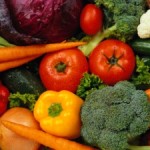
Cancers are not all the same
Authors of this study concluded that carotenoid levels may be a marker of risk for both ER-positive and ER-negative breast cancers, and this was especially seen for levels of alpha- and beta-carotene. However, in this study, carotenoid levels risk were especially related to more aggressive forms of breast cancer — risk was 52% lower among those with highest levels.
If further research supports this finding, it is especially exciting to see potential for preventing those breast cancers that take the highest toll. Such a distinction is seen with prostate cancer, where obesity and excessively high selenium levels are particularly linked with increased risk of aggressive forms of the disease.
Weight still matters
Excess body fat is one of the factors most strongly and consistently linked to risk of postmenopausal breast cancer. Physical activity seems to help reduce risk both through its role in maintaining a healthy weight and through direct effects on hormones and growth factors. Yet in this study, at least, higher blood carotenoid levels were associated with lower breast cancer risk only in those at a healthy weight (based on body mass index, BMI). Looking only within leaner women, highest blood carotenoids linked to more than a 35% reduction in risk. Comparisons among women who were overweight (BMI of 25 to 29.9) or obese (BMI 30 or greater) showed no link between carotenoid levels and breast cancer risk.
Researchers who conducted the study suggest that this might relate to the storage of carotenoids in body fat. Just as scientists refer to body fat as a “vitamin D sink”, as body fat increases, blood levels of carotenoids also decrease. This means that blood levels may not be as accurate a marker of vegetable and fruit intake among those with greater body fat.
However, eating more vegetables and fruits is still a recommended strategy regardless of weight, since their low calorie density can help people satisfy hunger on fewer calories. This makes reducing calories to reach a healthier weight a more doable goal. If you are among the many people at increased cancer risk because of excess body fat, remember that an abundance of vegetables and fruits can be a big help in reducing calories. At the same time, remember to consider other influences that may be driving calorie intake too high, like big portions, sugary drinks or non-hunger eating.
Long-term lifestyle counts
In this study, higher blood carotenoid levels were associated with a 21% lower risk of breast cancer occurring within 10 years. Yet with a longer-term view, higher levels linked to a 31% lower risk of cancers 10 to 20 years later. This fits with other studies suggesting that carotenoids could play a role in very early stages of cancer development. Even looking beyond carotenoids alone, laboratory studies show potential for many of the nutrients and phytochemicals in vegetables and fruits to act early in the cancer process, supporting antioxidant defenses, carcinogen deactivation, and anti-inflammatory pathways, as well as acting in later stages of cancer development.
Bottom Line on Reducing Breast Cancer Risk:
Abundance + Variety of Vegetables & Fruits is a Smart Target
This study adds to the growing body of research linking plant-focused eating and lower cancer risk. It does not justify choosing vegetables and fruits only based on their carotenoid content. Research provides good reason to make sure that you frequently select those that are dark green, orange and red – those most likely to be high in a variety of carotenoids – since several potential cancer-protective roles have been identified. Still, blood carotenoids’ link may be as a marker of higher vegetable and fruit consumption, so it makes sense to aim for a wide variety of choices, since other nutrients and compounds may also offer protection. The finding that carotenoid levels were especially linked to longer-term breast cancer risk adds to overall research on diet and cancer risk in saying: Don’t put off creating healthy habits….and don’t stop once you’ve got them.
Sign up to receive Smart Bytes® by email so you don’t miss a thing! (See right sidebar).
♦ To learn more about carotenoids and the many other phytochemicals in plant foods that may play a role in cancer prevention, check information from the American Institute for Cancer Research.
♦ For ideas to help you boost the vegetables and fruits you eat: Cooking Light offers 12 Ways to Eat More Vegetables and Fruit and Eating Well’s 7 Ways to Eat More Vegetables includes great ideas, too.
♦ To see how you can boost vegetables and fruits as part of eating habits that support a healthy weight and reduce cancer risk, check out Eat More, Weight Less from the Centers for Disease Control and Prevention (CDC).
Eliassen HE et al. Plasma carotenoids and risk of breast cancer over 20 y of follow-up. Am J Clin Nutr. April 2015, published online ahead of print.
Pantavos A et al. Total dietary antioxidant capacity, individual antioxidant intake and breast cancer risk: the Rotterdam Study. Int J Cancer. 2015;136(9):2178-2186.
Aune D, et al. Dietary compared with blood concentrations of carotenoids and breast cancer risk: a systematic review and meta-analysis of prospective studies. Am J Clin Nutr, 2012. 96: 356-373.
Liu X, Lv K. Cruciferous vegetables intake is inversely associated with risk of breast cancer: A meta-analysis. Breast. 2013; 22(3):309-313.
Kristal AR et al. Baseline Selenium Status and Effects of Selenium and Vitamin E Supplementation on Prostate Cancer Risk. J Natl Cancer Inst. 2014; 106(3):djt456 doi: 10.1093/jnci/djt456.
1 Comment
Leave a Comment
Published : May 5, 2015
Tagged: breast cancer, cancer prevention, cancer risk, carotenoids, cruciferous vegetables, healthy diet, healthy eating, plant-based diet
Meet the author/educator

Karen Collins
MS, RDN, CDN, FAND
I Take Nutrition Science From Daunting to Doable.™
As a registered dietitian nutritionist, one of the most frequent complaints I hear from people — including health professionals — is that they are overwhelmed by the volume of sometimes-conflicting nutrition information.
I believe that when you turn nutrition from daunting to doable, you can transform people's lives.
Accurately translating nutrition science takes training, time and practice. Dietitians have the essential training and knowledge, but there’s only so much time in a day. I delight in helping them conquer “nutrition overwhelm” so they can feel capable and confident as they help others thrive.
I'm a speaker, writer, and nutrition consultant ... and I welcome you to share or comment on posts as part of this community!
Having higher circulating blood -carotenoid levels may be particularly protective against breast cancers that do not need estrogen to grow.