
Colon cancer one of our most preventable: Do you know which steps really matter?
We can prevent about 45 percent of U.S. colorectal cancer with 5 basic lifestyle choices. According to today’s most up-to-date, research-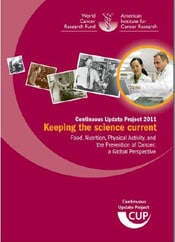 grounded report on how diet and lifestyle reduce risk, released by the American Institute for Cancer Research (AICR) and World Cancer Research Fund (WCRF) earlier this year:
1) Focus on plants. Whole plant foods — vegetables, fruits, whole grains, beans and nuts – don’t need to be the only thing you eat, but make them the core. Today’s studies show dietary fiber’s effectiveness more clearly than ever. Whole wheat and many vegetables provide fiber that adds bulk to reduce concentration of any carcinogens in the gut and helps move waste through more quickly, decreasing time for carcinogen damage. Fruits, dried beans, oatmeal and barley provide fiber healthy colon bacteria use to produce compounds that protect colon cells.
Although you could get these benefits from a fiber supplement or a refined grain with added fiber, that leaves you without the benefits of the many antioxidant, anti-inflammatory compounds in whole plant foods.
3 small steps to try:
- Double the vegetables in stir-fries, casseroles and burritos
- Experiment with adding beans or tofu to soups, stews and stir-fries
- Switch to whole grain bread (including whole grain pita, tortillas and pizza crust)
2) Cut some calories if you’re carrying extra weight, especially around your waist. Excess body fat creates cancer-promoting changes in hormones and promotes inflammation. So don’t simply add healthy foods – substitute them for other choices.
3 smart subs:
- Vegetables for half your starch – Since grains are twice as concentrated in calories as non-starchy vegetables, you’ll cut calories without noticing. For example, make stew or soup with more vegetables than rice or pasta.
- Water, tea, coffee, seltzer instead of soda or sugary tea & coffee specialty drinks
- Unwind with a walk, meditation, music, a book or a phone call instead of sweets or booze
3) If you drink alcohol, limit it to no more than 1 (women) or 2 (men) a day. Alcohol’s concentrated calories affect weight, and it’s metabolized to compounds that damage cells and can lead to cancer.
3 approaches:
- Alternate alcoholic drinks with water or club soda.
- Watch your glass size. The standard drink in recommendations means 12 oz beer, 5 oz wine or 1.5 oz 80-proof liquor – smaller than what is often served.
- Expand your social habits and find other ways to linger. Meet at a coffee bar, go out for a walk or take dance classes.
4) Get moving. Even if you don’t lose weight, a little extra activity every day can stop or slow weight gain. What’s more, regular physical  activity fights cancer development directly through changes in hormones regardless of weight.
3 tips:
- Stressed out? Instead of zoning out to a TV show you watch “just because”, take a 30-minute walk.
- Get up just 10 minutes early and walk. Progress to 20 or 30 minutes if you can.
- Stick 10-minute blocks of moving throughout your day: get off public transit one stop early, walk 10 minutes at lunch or on a break, head outside or turn on your favorite tunes to unwind when you get home.
5) Limit red meat (beef, lamb & pork) and avoid processed meat. Federal data shows Americans are still eating more red meat than poultry or seafood, despite recommendations to keep it to no more than 18 ounces a week.
3 ideas:
- In a mixed dish, cut the amount of red or processed meat and add extra vegetables.
- Switch a few dishes from red meat to poultry or tofu.
- Try using beans or lentils in a soup or stew. Try Meatless Monday (or once a week any day).
#6 Bonus tip: Quit smoking or don’t start. Tobacco use was outside the scope of the AICR/WCRF report on colon cancer, but smoking is a clear risk factor for colorectal cancer.
Bonus payoff: Following these basic steps will do a lot more than reduce your risk of colon cancer. A study of almost 112,000 non-smoking men and women tied these same steps to fewer deaths from all types of cancer and heart disease – for 43% fewer deaths overall.
Resources
If figuring out how to get more active is a challenge, AICR has a great brochure on beginning the transition, Start Where You Are. You can download a free copy on the website.
References
1 Policy and Action for Cancer Prevention. Food, Nutrition, and Physical Activity: a Global Perspective. World Cancer Research Fund / American Institute for Cancer Research. Washington DC: AICR, 2009.
2 Continuous Update Project Report Summary. Food, Nutrition, Physical Activity and the Prevention of Colorectal Cancer. World Cancer Research Fund / American Institute for Cancer Research. 2011.
3 McCullough et al. Following cancer prevention guidelines reduces risk of cancer, cardiovascular disease, and all-cause mortality. Cancer Epid Bio Prev, 2011.
Published : October 25, 2011 | Last Updated: November 11, 2011
Tagged: alcohol, cancer prevention, colon cancer, dietary fiber, overweight, weight
Meet the author/educator

Karen Collins
MS, RDN, CDN, FAND
I Take Nutrition Science From Daunting to Doable.™
As a registered dietitian nutritionist, one of the most frequent complaints I hear from people — including health professionals — is that they are overwhelmed by the volume of sometimes-conflicting nutrition information.
I believe that when you turn nutrition from daunting to doable, you can transform people's lives.
Accurately translating nutrition science takes training, time and practice. Dietitians have the essential training and knowledge, but there’s only so much time in a day. I delight in helping them conquer “nutrition overwhelm” so they can feel capable and confident as they help others thrive.
I'm a speaker, writer, and nutrition consultant ... and I welcome you to share or comment on posts as part of this community!